What Are CPT Codes in Medical Billing? Complete Guide for Healthcare Providers
Accurate medical billing starts with accurate coding. One of the most important coding systems used in healthcare today is the CPT code system. Whether you're a physician, practice manager, or healthcare administrator, understanding CPT codes in medical billing is essential for reducing claim denials, improving reimbursement rates, and maintaining compliance.
Every year, millions of insurance claims are processed using CPT codes. These standardized codes help insurance companies understand what services were provided, determine reimbursement eligibility, and process claims efficiently.
At
Valley Medical Billing, proper CPT coding is a critical part of helping healthcare practices maximize revenue and avoid costly billing errors.
What Is a CPT Code?
CPT stands for Current Procedural Terminology.
Developed and maintained by the American Medical Association (AMA), CPT codes are five-character codes used to describe medical, surgical, diagnostic, and evaluation services performed by healthcare providers.
In simple terms, a CPT code tells an insurance company:
- What service was provided
- Who provided the service
- When the service occurred
- How the provider should be reimbursed
Without proper CPT coding, healthcare providers may experience claim denials, underpayments, or payment delays.
What Are CPT Codes Used For?
CPT codes are used throughout the healthcare revenue cycle.
They help with:
Insurance Claims Processing
Insurance companies use CPT codes to determine coverage and reimbursement amounts.
Medical Billing
Billing teams include CPT codes on claims submitted to commercial insurers, Medicare, and Medicaid.
Revenue Cycle Management
Accurate CPT coding supports clean claim submissions and improves reimbursement performance.
Healthcare Reporting
Providers and healthcare organizations use coding data for quality reporting, utilization tracking, and compliance purposes.
How CPT Coding Works in Medical Billing
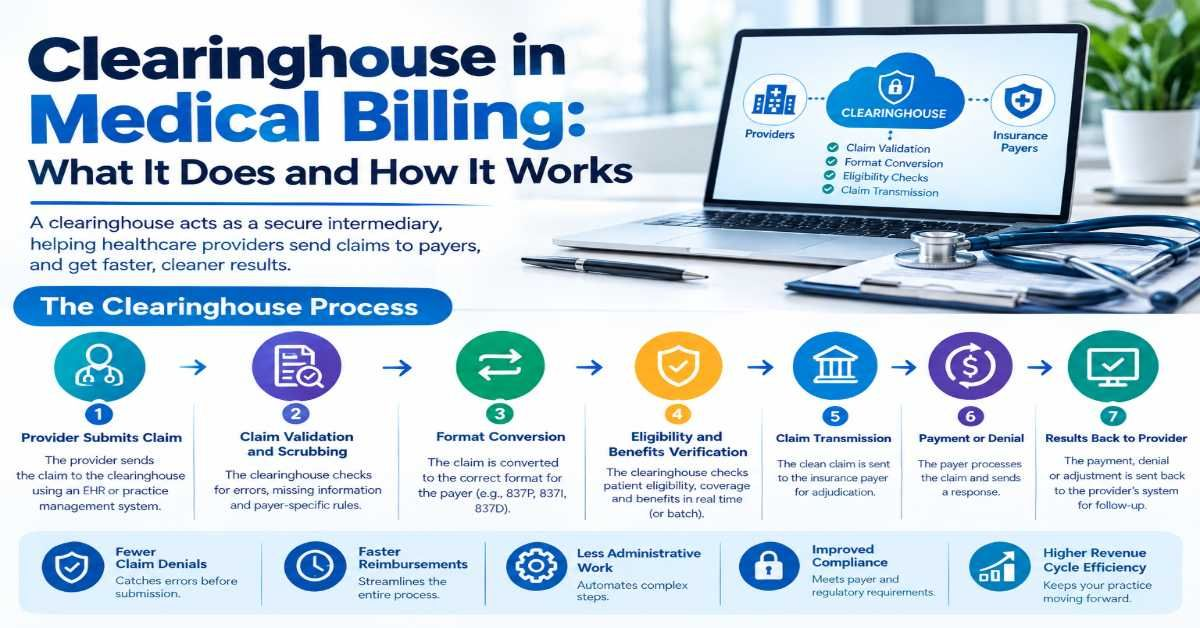
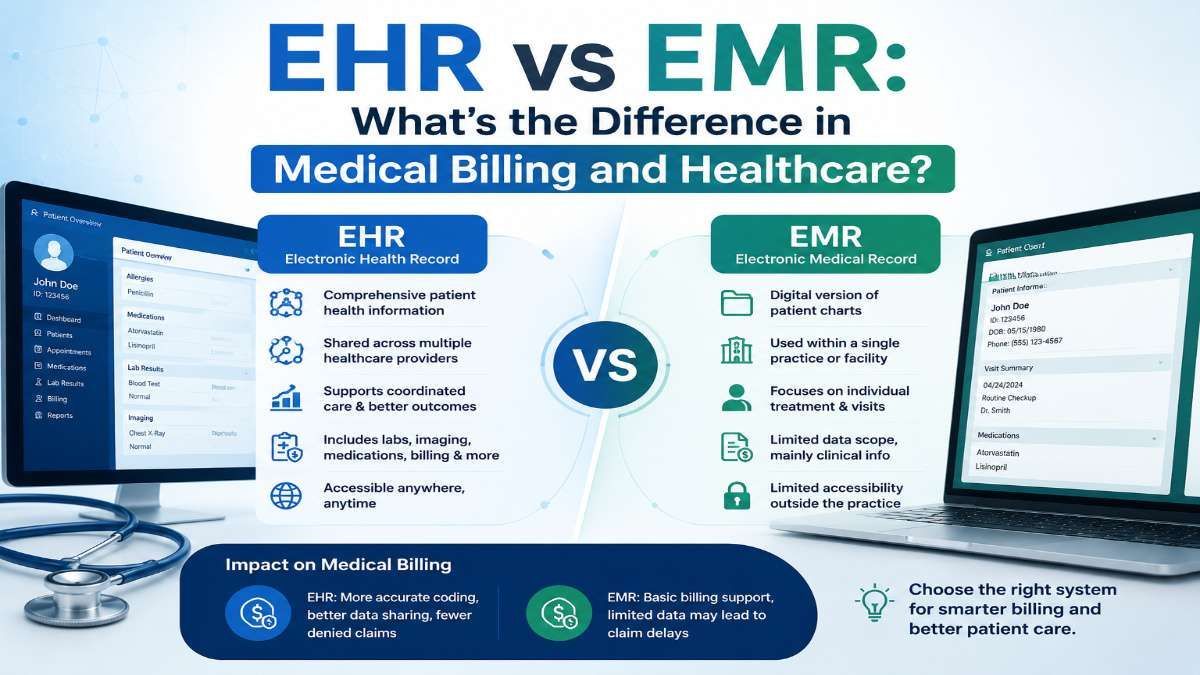
When a patient receives medical care, the provider documents the visit in the patient's chart or EHR system.
Certified coders then review the documentation and assign the appropriate CPT code based on the services performed.
The billing workflow generally follows these steps:
- Patient receives treatment
- Provider documents the encounter
- CPT and diagnosis codes are assigned
- Claim is submitted to the payer
- Insurance reviews the claim
- Reimbursement is issued or additional information is requested
Even small coding errors can result in claim rejections, making CPT coding one of the most important parts of medical billing.
Types of CPT Codes
Many providers ask, "What are the three categories of CPT codes?"
The CPT code system is divided into three primary categories.
Category I CPT Codes
These are the most commonly used CPT codes in healthcare.
They cover:
- Office visits
- Surgical procedures
- Radiology services
- Laboratory testing
- Pathology services
- Anesthesia services
Examples include:
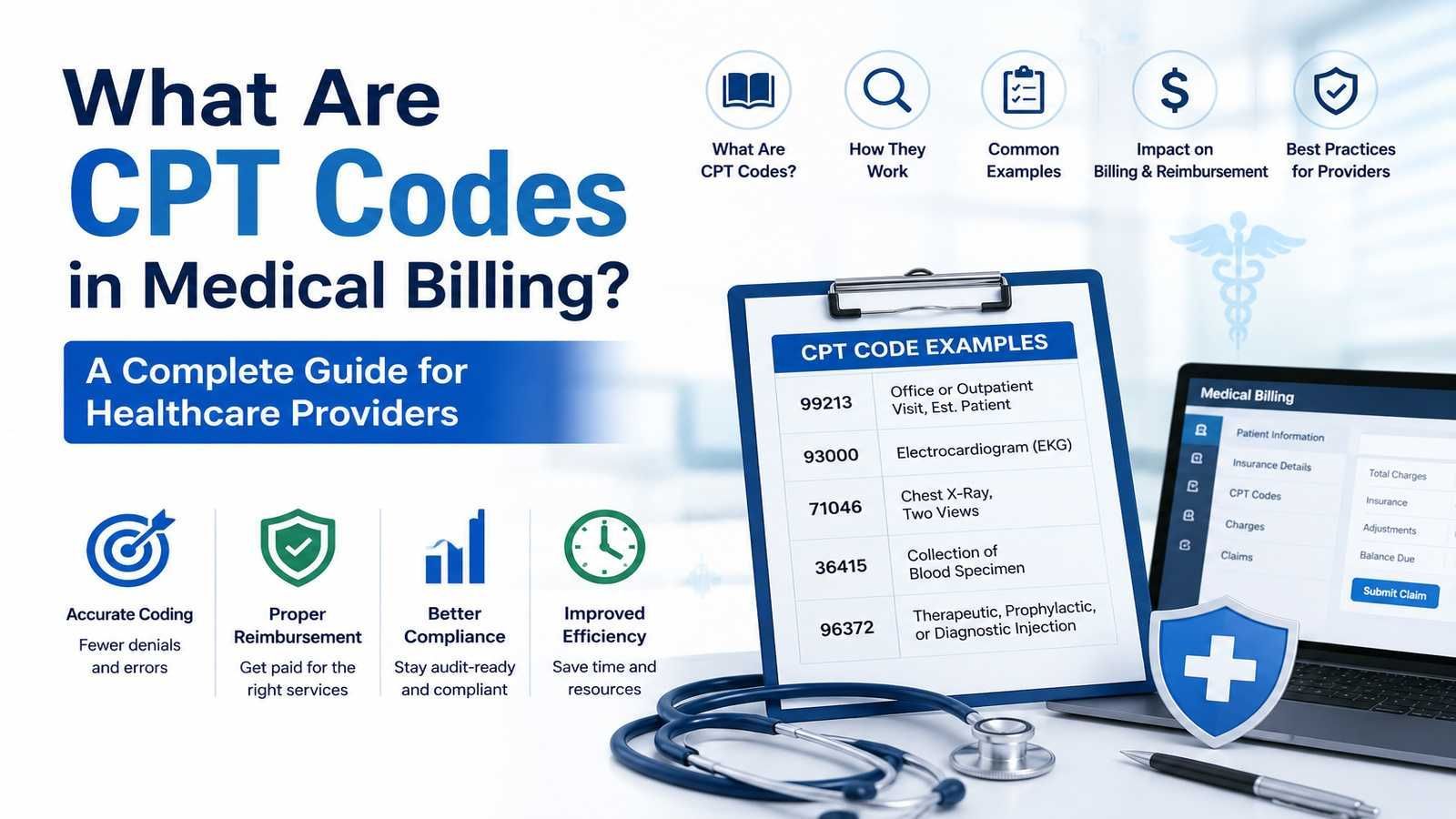
- 99213 – Established patient office visit
- 99214 – Moderate complexity office visit
- 93000 – Electrocardiogram (EKG)
Category II CPT Codes
Category II codes are used for performance measurement and quality reporting.
These codes help healthcare organizations track outcomes and compliance with quality initiatives.
Unlike Category I codes, they are generally not used for reimbursement.
Category III CPT Codes
Category III codes are temporary codes assigned to emerging technologies, procedures, and services.
These codes allow healthcare organizations to track new treatments before permanent CPT codes are created.
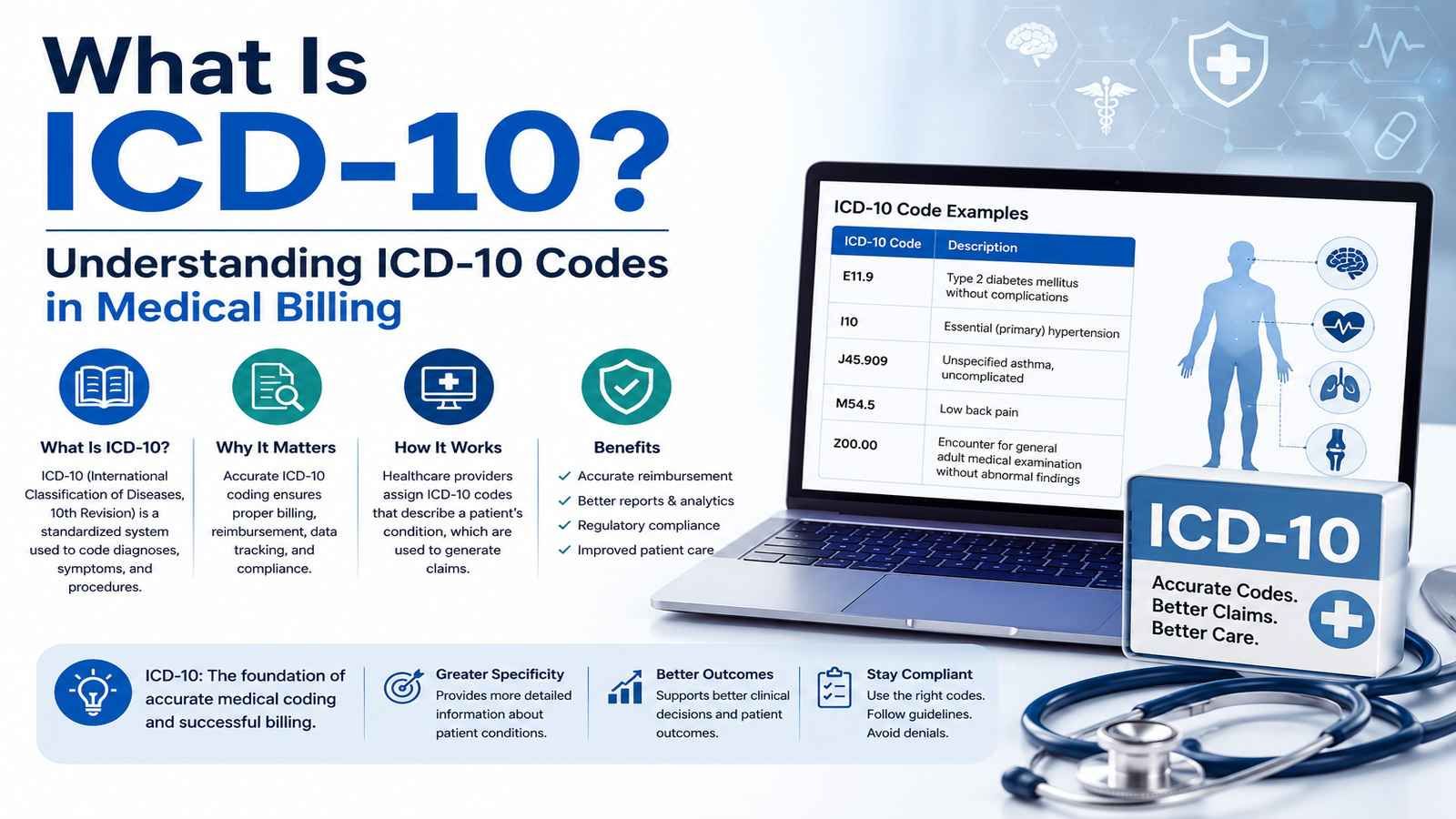
CPT Codes vs ICD-10 Codes: What's the Difference?
Many healthcare professionals confuse CPT and ICD-10 codes.
Here's a simple distinction:
CPT Codes
Describe what service or procedure was performed.
ICD-10 Codes
Describe why the service was performed by identifying the patient's diagnosis or condition.
For example:
ICD-10 Code
- J02.9 – Acute pharyngitis
CPT Code
- 99213 – Office visit
Both codes work together to support medical necessity and insurance reimbursement.
Common CPT Code Examples
Understanding common CPT code examples can help providers better understand claim submissions.
CPT Code
Description
99213
Established patient office visit
99214
Moderate complexity office visit
90686
Influenza vaccine administration
93000
Electrocardiogram (EKG)
71046
Chest X-ray, two views
The exact reimbursement associated with a CPT code depends on payer contracts, geographic location, and insurance policies.
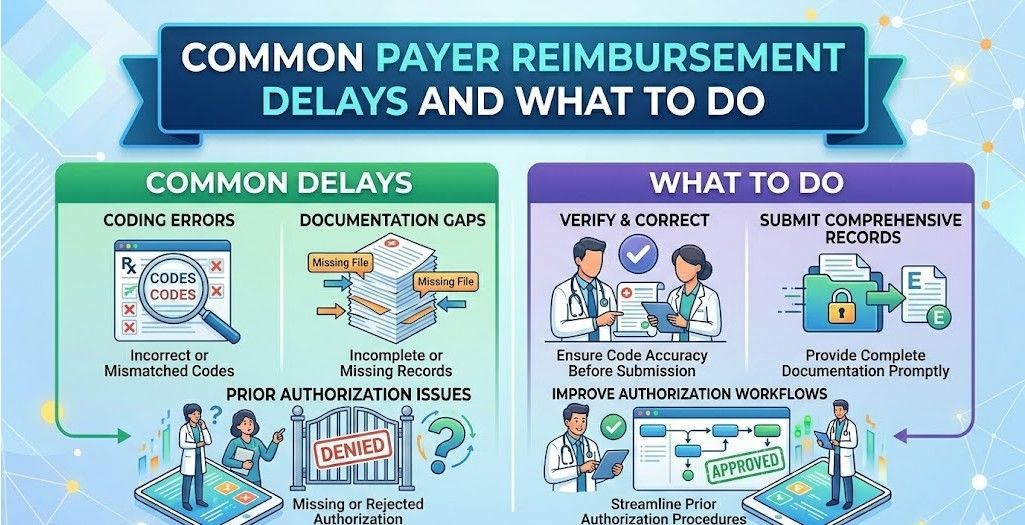
Common CPT Coding Mistakes That Cause Claim Denials
Incorrect CPT coding is one of the leading causes of denied medical claims.
Common errors include:
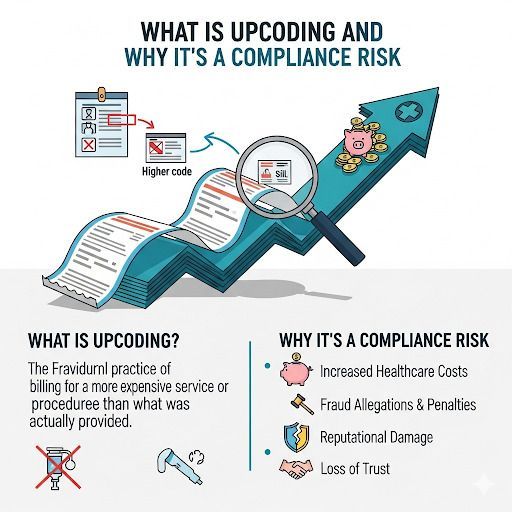
Upcoding
Billing for a higher-level service than documented.
Undercoding
Billing for a lower-level service than performed.
Missing Modifiers
Failing to include necessary CPT modifiers when required.
Documentation Gaps
Insufficient clinical documentation to support the reported service.
Outdated CPT Codes
Using retired or revised codes that are no longer accepted.
Regular coding audits and professional billing support can significantly reduce these issues.
How CPT Codes Impact Reimbursement
Insurance companies rely heavily on CPT codes when calculating payments.
Incorrect coding can lead to:
- Reduced reimbursement
- Claim denials
- Payment delays
- Compliance risks
- Audit exposure
That's why accurate CPT coding in medical billing is essential for maintaining a healthy revenue cycle.
Practices that invest in proper coding processes often experience improved collections and fewer billing issues.
How Valley Medical Billing Helps Healthcare Providers
At Valley Medical Billing, accurate coding is a core component of our revenue cycle management services.
Our team helps healthcare providers:
- Assign accurate CPT codes
- Reduce coding-related claim denials
- Improve reimbursement accuracy
- Stay compliant with payer requirements
- Optimize medical billing workflows
By combining coding expertise with proactive claim management, we help healthcare practices strengthen their financial performance.
FAQs
What does CPT stand for in medical billing?
CPT stands for
Current Procedural Terminology, a coding system developed by the American Medical Association (AMA) to describe medical procedures and services.
What are CPT codes used for?
CPT codes are used to report medical procedures and services for insurance claims, billing, reimbursement, and healthcare reporting.
What are the three categories of CPT codes?
The three main CPT code categories are:
- Category I (standard procedures and services)
- Category II (performance measurement)
- Category III (emerging technologies)
What is the difference between CPT and ICD-10 codes?
CPT codes describe the service performed, while ICD-10 codes describe the patient's diagnosis or condition.
Why are CPT codes important in medical billing?
CPT codes determine how services are reported to insurance companies and directly affect claim approval and reimbursement amounts.