Clearinghouse in Medical Billing: What It Does and How It Works
Submitting a medical claim is not as simple as sending billing information from a practice directly to an insurance company. Most electronic claims move through a healthcare clearinghouse before reaching the payer.
A
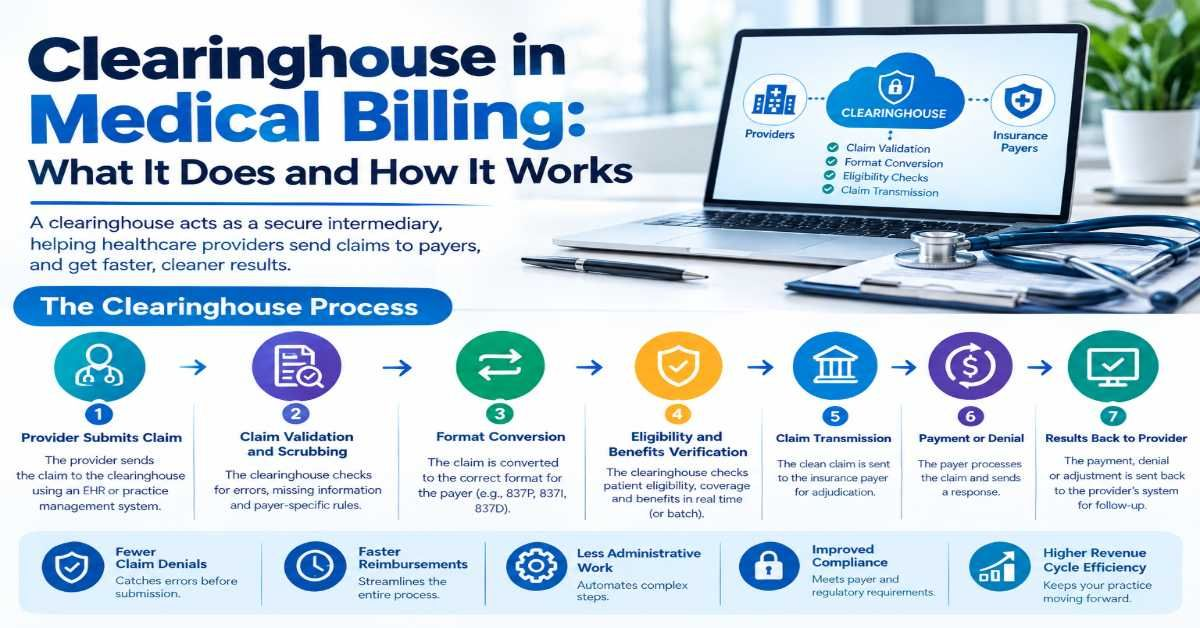
clearinghouse in medical billing acts as an electronic intermediary between healthcare providers and insurance payers. It receives claim information from a provider's billing system, checks the transaction for certain errors and requirements, and sends it to the appropriate payer when the submission can be transmitted.
Understanding this process helps practices distinguish between a claim that was rejected before payer processing and one that was actually denied by the insurance company.
What Is a Clearinghouse in Medical Billing?
A medical billing clearinghouse is a company or electronic service that facilitates the exchange of standardized healthcare transactions between providers and payers.
Healthcare providers use clearinghouses to submit electronic claims and, depending on the service, handle other transactions such as eligibility inquiries, claim status requests, and electronic remittance advice.
The clearinghouse does not decide whether a medical claim should be paid. That decision belongs to the insurance payer.
For a medical practice, the clearinghouse provides a connection between its billing software and the electronic systems used by participating payers.
How Does a Medical Billing Clearinghouse Work?
The process begins when a provider's billing system creates an electronic claim using information from the patient's account and the documented services.
The claim is sent to the clearinghouse. The clearinghouse processes the electronic transaction and may check required fields, formatting, payer information, provider information, and other applicable requirements.
If the transaction passes the applicable checks, the clearinghouse routes it to the designated payer.
The payer then processes the claim based on the patient's coverage, provider information, submitted claim data, contracts, and applicable payment policies.
The practice receives electronic responses during this process. These responses can indicate whether the transaction was accepted, rejected, or processed by the payer.
The exact workflow varies according to the clearinghouse, billing software, payer, and transaction being submitted.
What Does a Clearinghouse Do?
Clearinghouses can perform several functions within a medical billing operation.
Electronic Claim Submission
One of the primary functions is transmitting electronic claims from healthcare providers to participating insurance payers.
Instead of maintaining separate electronic connections with every payer, a practice can use a clearinghouse that has established connections with the payers it works with.
Claim Validation
A clearinghouse may run claims through front-end edits before transmission. These checks can identify certain missing, invalid, or incorrectly formatted information.
Examples may include problems involving:
- Patient or subscriber information
- Payer identification
- Provider information
- Required claim fields
- Electronic transaction formatting
- Data that does not meet a payer's submission requirements
The checks performed depend on the clearinghouse and payer connection.
Payer Routing
A clearinghouse can route electronic transactions to the appropriate payer based on the information contained in the claim.
This is particularly useful for practices that submit claims to multiple commercial insurers, Medicare, Medicaid programs, and other payers.
Electronic Remittance
Many clearinghouses also support electronic remittance transactions.
The
835 transaction, commonly known as the Electronic Remittance Advice (ERA), provides payment and adjustment information from a payer. When integrated with billing software, this information can support payment posting and account reconciliation.
Eligibility and Claim Status Transactions
Clearinghouses may also support other HIPAA-standard transactions.
For example, the
270/271 transaction is used for eligibility inquiries and responses, while the
276/277 transaction is used for healthcare claim status inquiries and responses.
These services can reduce the need for billing staff to perform every transaction manually through individual payer portals.
Clearinghouse Rejection vs. Insurance Denial
One of the most important concepts in medical billing is knowing the difference between a
clearinghouse rejection and an
insurance denial.
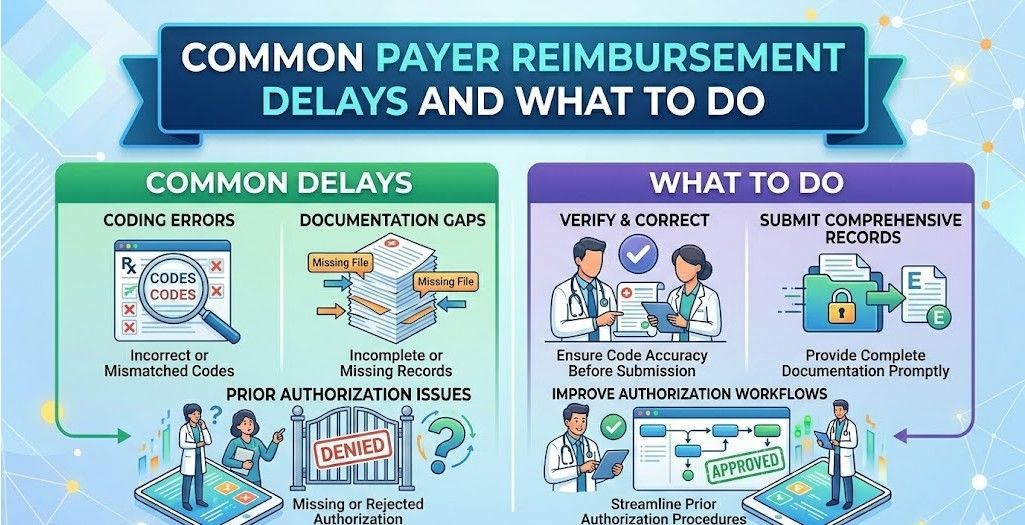
A clearinghouse rejection generally occurs before the claim has successfully completed payer adjudication. The electronic transaction may have failed an edit, contained invalid information, or not met a particular submission requirement.
An insurance denial occurs when the payer processes the claim and determines that the submitted service or amount is not payable as billed.
For example, a claim may be rejected because required subscriber information is missing. The billing team would correct the information and resubmit the claim.
A payer may instead deny a properly transmitted claim because the service is not covered under the patient's plan or because an applicable authorization requirement was not met.
The appropriate response depends on where the claim stopped and the reason returned with the transaction.
What Causes a Clearinghouse Rejection?
There is no single list of rejection reasons because requirements vary by payer, transaction type, and clearinghouse.
Common problems can include inaccurate patient information, invalid payer details, missing required fields, incorrect provider information, and electronic formatting errors.
Some payer-specific edits can also prevent a claim from being transmitted successfully.
When a rejection occurs, the billing team should review the complete rejection message rather than simply resubmitting the claim without making a correction.
The basic questions are:
- Did the claim reach the payer?
- What caused the rejection?
- Which claim information needs to be corrected?
- Does the corrected claim need to be resubmitted?
- Is there a payer-specific submission requirement that needs to be addressed?
Answering these questions helps prevent the same rejected claim from cycling through the billing system repeatedly.
Is a Clearinghouse the Same as an Insurance Payer?
No.
A clearinghouse facilitates electronic healthcare transactions. An insurance payer processes claims and makes payment determinations.
This difference is important when investigating unpaid claims.
If a claim was rejected by the clearinghouse, the billing team may need to correct the claim and submit it again.
If the payer received and adjudicated the claim, the next step may involve reviewing the explanation of benefits, electronic remittance advice, denial information, or payer instructions.
Confusing these two stages can result in the wrong follow-up action.
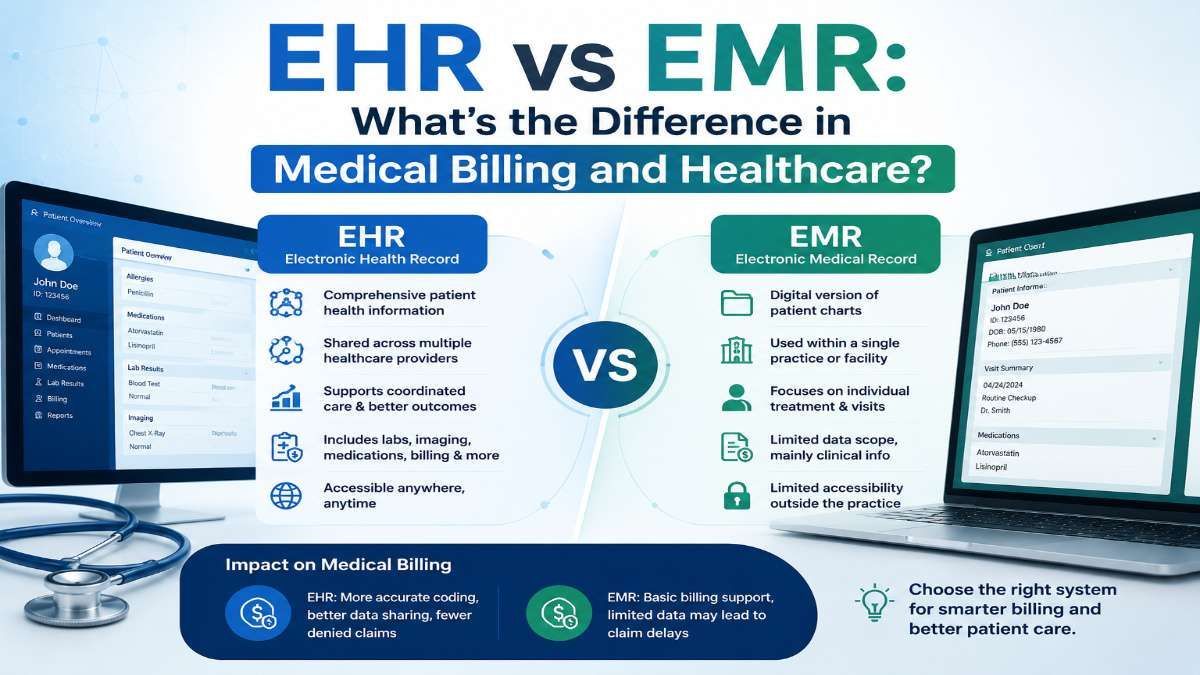
What Is the Difference Between a Clearinghouse and an EHR?
An EHR, or electronic health record system, primarily manages clinical and patient information.
A clearinghouse focuses on the electronic exchange of healthcare transactions between providers and other organizations.
An EHR or practice management system may connect to a clearinghouse so that billing staff can submit claims electronically without manually entering the same information into multiple payer systems.
Some healthcare technology platforms combine EHR, practice management, billing, and clearinghouse functions, so the distinction may not always be visible to the person submitting a claim.
Do All Medical Claims Go Through a Clearinghouse?
No.
Electronic claim submission requirements depend on the payer, provider arrangement, transaction type, and available submission method.
Some claims may be submitted through a clearinghouse, while other situations may involve direct electronic connections or other approved submission methods.
Practices should verify the current electronic submission requirements of the specific payer rather than assuming that every claim follows the same route.
How Can a Medical Billing Company Help With Clearinghouse Claims?
A medical billing company can manage clearinghouse-related work as part of the broader billing process.
This may include reviewing claims before submission, monitoring electronic claim responses, identifying rejected claims, correcting billing information, resubmitting claims, and tracking payer responses.
The clearinghouse itself does not replace these billing functions. It provides the electronic infrastructure used to exchange transactions.
Accurate patient information, coding, documentation, payer information, eligibility checks, and timely follow-up remain essential to the overall claims process.
Frequently Asked Questions
What is a clearinghouse in medical billing?
A clearinghouse is an electronic intermediary that facilitates healthcare transactions between providers and insurance payers. It can process, validate, and route electronic claims and support other healthcare transactions.
Does a clearinghouse pay medical claims?
No. A clearinghouse does not determine claim payment. The insurance payer processes the claim and determines whether and how it will be paid.
What happens when a clearinghouse rejects a claim?
The rejection should be reviewed to determine why the transaction failed. The billing team can then correct the affected information and resubmit the claim when appropriate.
Is a clearinghouse required for electronic medical claims?
Not in every situation. Submission requirements depend on the payer, transaction, and provider's electronic billing arrangement.
Can a claim be rejected by a clearinghouse and then denied by insurance?
Yes, but these are separate events. A clearinghouse rejection can prevent a claim from reaching successful payer processing. If a corrected claim is later submitted and adjudicated by the payer, that claim could still receive a payer denial for a separate reason.